Reviews

The Employees by Olga Ravn

The Employees by Olga Ravn It’s rare to finish a book and wonder if it was lacking or if it was so smart that you just didn’t get it. It’s rarer still to have a group of seven people, many of whom are very well read, say the same. I read The Employees as part of a book club; it’s not something I’d usually pick up and I went into it knowing pretty much nothing about it. The book is recounted as partial interview recordings from employees on a space ship and framed as a productivity report by the overarching corporation. Some of the employees are human, some are humanoid. We hear about how they view each other and their tasks and perceptions. It’s an experimental book. It plays with form, the amount of information given, and leaves the reader to draw their own conclusions. There are many momentary “why”s, single entries that pose questions and raise topics, none of which are returned to or explored. Unfortunately, I don’t feel like it worked. Each section was really well written but for most of the book it felt disjointed and awkward. I kept waiting for the moment when it clicks and everything falls into place, with the early entries making sense in the new context, but that never happened. While the book felt more cohesive as it progressed and a narrative was established, I felt like it was missing an overarching why. There are many momentary “why”s, single entries that pose questions and raise topics, none of which are returned to or explored. The framing as a productivity report from a corporation felt like it was draped over the interviews after they were written. As if that context was added in an attempt to make it more topical, which particularly jarred with the way the characters spoke in the interviews. Few mentions of work, workplace issues, productivity or process. And frankly way too few dives into corporate-speak drivel. Furthermore, the characters felt barely existent. This might be the biggest reason it didn’t work for me. I like strong characterisation and arcs, neither of which are present in this book. …rehashing the same concepts that have bounced through the genre for decades. I haven’t read a lot of science fiction, but the more literary science fiction I read, the more I’m convinced that most people have never read any of it. Frequently I’ll see books positioned as having new and unique takes only to find them rehashing the same concepts that have bounced through the genre for decades. Maybe t I should think about each momentary why and not the overarching idea. Maybe I’m being too harsh because I don’t tend towards experimental fiction. Maybe the whole thing went over my head and that’s why I didn’t enjoy it. Or maybe it just didn’t really work.

The Employees by Olga Ravn Read More »
devilwearsprada2

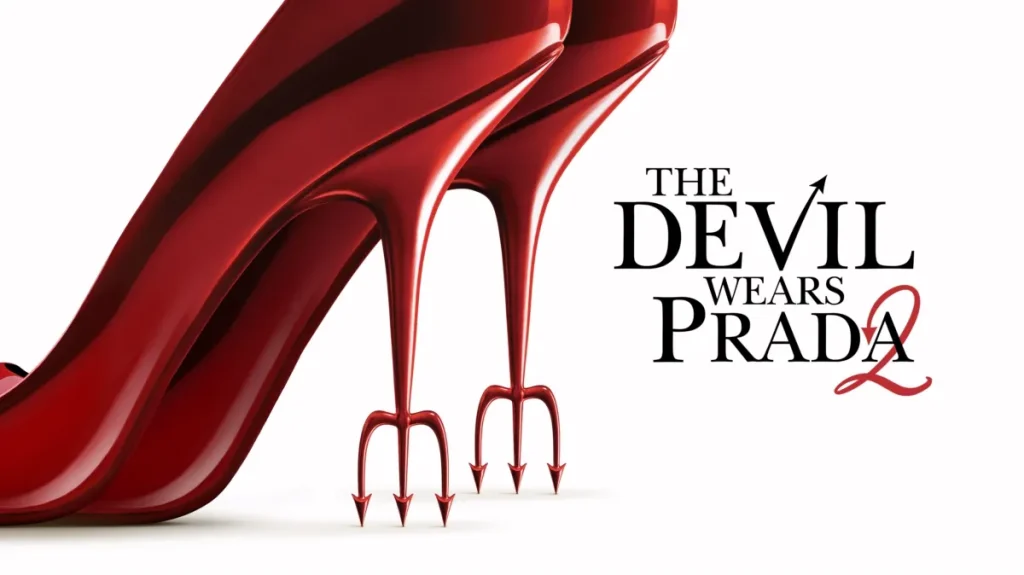
Better the Devil You Knew – The Devil Wears Prada 2

Better the Devil You Knew – The Devil Wears Prada 2 Movie reviews? For a blog? Groundbreaking. Note: this piece contains spoilers and discussion of core plot points and themes.Andy Sachs returns to Runway magazine to find it’s in dire straits as the position of magazines and journalism decline in the modern world. The magazine is being downsized, and Andy must find a way to save it. During a dinner scene the definitely-not-Elon-Musk-alike potential new owner presents the core theme of the movie clearly: if certain people get their way, in the near future there will be no place to celebrate and highlight the pinnacle of human artistic creation. We must fight for a world where thought and taste and human ingenuity triumph over a technology revolution that seeks to destroy what we love. It’s a movie about how art and human creation have been commodified and reduced. How we need bastions of beauty and celebrations to the creativity of people and what they can achieve. All a great message. I agree. We must fight for a world where thought and taste and human ingenuity triumph… Which is why it’s so strange to look at The Devil Wears Prada 2 as the movie trying to make that statement. It exists in a sea of sequels to old popular movies which don’t seem to understand why people liked the original. I was shocked to find out that Prada 2 has the same writers and director as the original. What on earth happened? The first act is entirely void of dramatic tension. Andy loses her job and is immediately hired by Runway – a given for the sequel – and gets to work. At this point, Andy is an award-winning journalist at the top of her game, but somehow, she can’t take criticism, knows little about the metrics of online journalism and regresses to fawning and panic at the sight of Miranda. Andy as a character has grown, but only in ways that make her less interesting. (Props where they’re due, Andy is no longer with the terrible chef boyfriend and her date with Australian contractor guy is very cute.) Miranda has entirely lost her teeth. The movie presents this as the effect of the new HR compliant world. Something only a person who has never worked in an office would concoct. Her floundering with this new reality is over played for laughs it rarely lands. I kept expecting there to be an illness reveal for the character, something that actually explained how she went from icon to disapproving boss. It turns out being told she’s not allowed to be mean was all it took. As if extremely wealthy and well-connected moguls ever stoop to the level of HR compliance. The tension builds at a glacial pace; to be fair, it does reflect a modern glacier: disappearing before our eyes. The dialogue is at pains to clearly signal what is happening and what people need to pay attention to. Gone are the subplots and unspoken signals we try to work out alongside the characters. The tension builds at a glacial pace; to be fair, it does reflect a modern glacier: disappearing before our eyes. There are many opportunities to create dramatic tension, but at every chance the movie not only misses the mark, but I can only believe it didn’t realise there was a mark to begin with. Take, for instance, the trip to the Hamptons:Andy is invited to a last-minute trip to the Hamptons with Miranda, in preparing for this, Nigel lends her an impressive expensive dress. While there she’s whisked in and introduced to many impressive people, before we settle on a dinner scene. Miranda is contemplative at one end and, noticing this, Andy accidentally drops some food on her dress. She jumps up and darts to the kitchen to try to save the fabric.As an audience we have questions: Is this getaway a setup by Miranda? Is someone waiting in the wings to disrupt Andys/Runways world? Will ruining this dress have consequences for Andy’s relationship with Nigel? No to all of the above. Andy cleans the dress and talks to Miranda who is happy and bubbly and complementary. Instead of celebrating fashion and the creation of art, the movie celebrates the celebration. The original was about fashion, truly about fashion and the fashion world and how there’s so much going on that we don’t know. On first viewing we’re all Andy Sach scoffing at belt buckles and unaware of the impact of cerulean. The sequel is about montages, referencing the original, and slagging off tech bros. Don’t get me wrong, Benji earnestly explaining how travelling to Mars is overdone and how he plans to explore the Sun instead was a great moment. Hilarious. It also shouldn’t be one of my highlights from a Devil Wears Prada movie. For a fashion movie, the sequel lacks, well fashion. There is a show in Milan that’s set up to be a pivotal moment for Runway. It highlights the history that the magazine has with the city, implies that the art of the Renaissance and the fashion of today are parallel achievements of human greatness. So I really have to question why most of the fashion show is about Lady Gagas performance. Why we see so little when it comes to models, photoshoots or fashion designers. Instead of celebrating fashion and the creation of art, the movie celebrates the celebration. Instead of looking at the fashion world or the journalism world, it looks at the world of the original movie. For a movie arguing that human achievement and creation is paramount and should be celebrated, Prada 2 fails at every aspect that makes movies art. Frankly it barely passes the bar for entertaining.

Better the Devil You Knew – The Devil Wears Prada 2 Read More »

Story Versus Fact In Son of Nobody by Yann Martel

Story Versus Fact in Son of Nobody by Yann Martel Maybe we’ve always lived in a post truth world. One where we’ve always dreamed of meeting our gods. Once we would all get the chance to meet Hades, until we killed him, too. I didn’t expect to like Son of Nobody by Yann Martel as much as I did. I’m rarely a fan on books that play with form. They frequently catch me in the change and I spend more time thinking about how this different way of writing doesn’t work. Son of Nobody plays with form, and it does it well. Canadian Classicist Harlow Donne travels to Oxford to take part in a great study of papyrus found in an ancient site, while there he comes across accounts of Psoas, Son of Nobody, a new telling of the Trojan War. Donne decides to stay in search of the new epic The Psoad and documents not only the poem, but his thoughts as the poem comes together. Half of the book is a telling of The Psoad, written in the style of Greek verse like The Iliad or The Odyssey. The other half is Donne’s life told in the footnotes. Some footnotes explain the poem in more detail, but others follow what’s happening in Donne’s life, with his supervisor, his wife, and his daughter Helen. The form works really well. It feels like reading someone’s thoughts as they’re explaining a big project they worked on. Sometimes topical, often informative, but as life builds momentum the focus shifts from the examination more and more. Son of Nobody explores some eternal themes: life, death, loyalty, family; and shows how some modern concepts aren’t so modern after all. How the epic poems became substitutes for facts and how we can integrate a story into our lives and our culture more solidly than any truth. “Their stories did something surprising: they made the facts unnecessary. Or, to put it another way, their stories became facts, as solid to build upon.” After all, let’s be real, did the Mycenaeans really spend a decade laying siege to one city? Did they manage, after all this, to build a massive wooden horse so structurally sound that it could be wheeled inside the walls with fifty men inside? Where the Trojans, after ten years of violence, so naïve to let it through the gates? The epic poems are less about fact, more about a view of the world. When Virgil was commissioned to write the Aeneid, in the style of an old epic to rewrite the history of Rome, he knew that the stories of Homeric epics were much more important than the facts. The goal was to create entertainment that becomes the fact, not entertainment beholden to the facts. This has always been common and still is. Movies and tv shows “based on a true story” have the power to rewrite history, the events presented on screen become the only reality that many people know. If biopics, historical epics, or movies about influential events present an unreality, for many people, that’s the only version of the world that they know. Should we all verify the events after watching a show? Probably. Do we? No. Will we? Also no. At some point the reality becomes less important than the shared story. Donne’s perception of story, fact, and truth gets pulled into focus more as the book goes on. The footnotes are his epic poem, his perspective that isn’t always the truth, but is solid enough that he can build upon it At times The Psoad lags, there are passages that feel longer than they need to be and I found myself rushing over them. The form does make it disjointed and a slapdash insight into a person’s world. I find that it works, but it results in a less cohesive narrative than I would usually be drawn to.  Overall, Son of Nobody is a definite recommended read from me. You don’t need any basis in the Homeric epics to enjoy it, everything you need to know will be explained. If you’re the kind of people who views retellings or adaptation as the greatest travesty ever committed to culture, then maybe give it a miss. Maybe also avoid the eBook version, I don’t know how well the formatting tricks will work there. Otherwise, give it a go: decide for yourself what is story, and what is real, and if that distinction matters any more, or if it ever did. One quick thing: Before reading, look up the word “uxorious”.Maybe you already know it, but probably you don’t, I definitely didn’t. Sometimes things are lost to time for good reason.

Story Versus Fact In Son of Nobody by Yann Martel Read More »